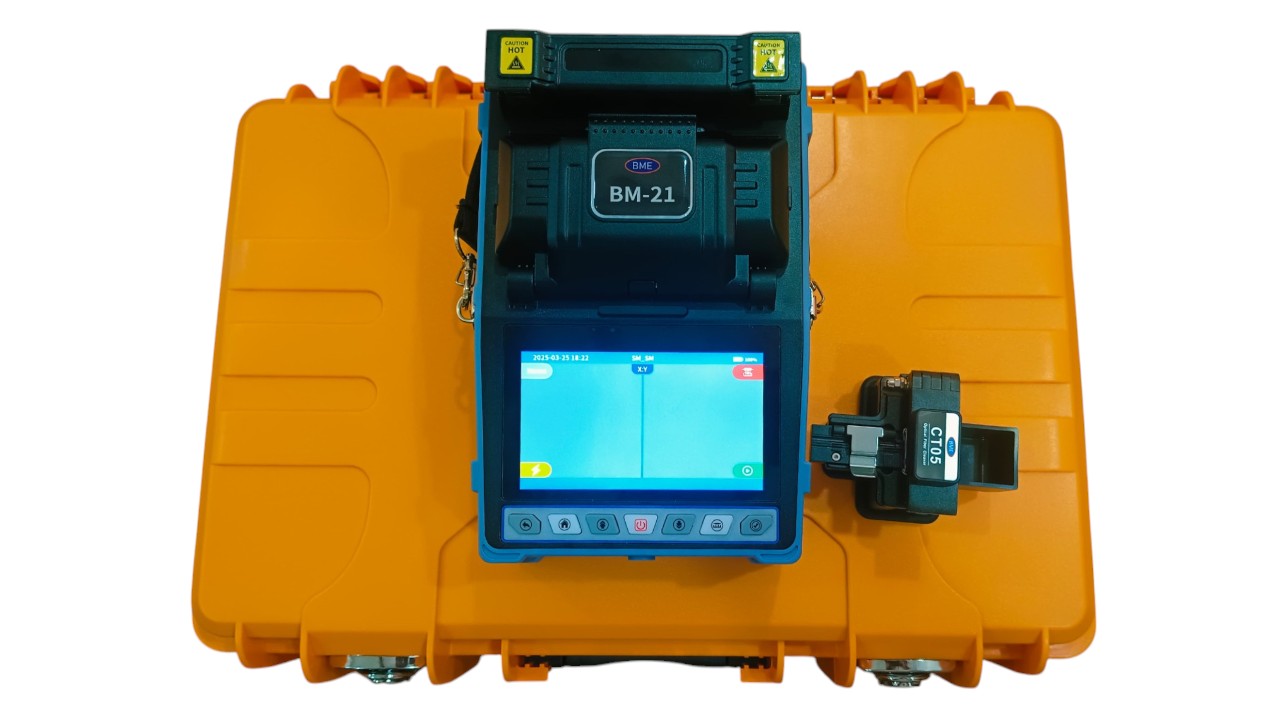
HD Optical Image Acquisition System
Lens Imaging Fiber Alignment System
Real-time arc correction system
6s fast welding 18s efficient heating
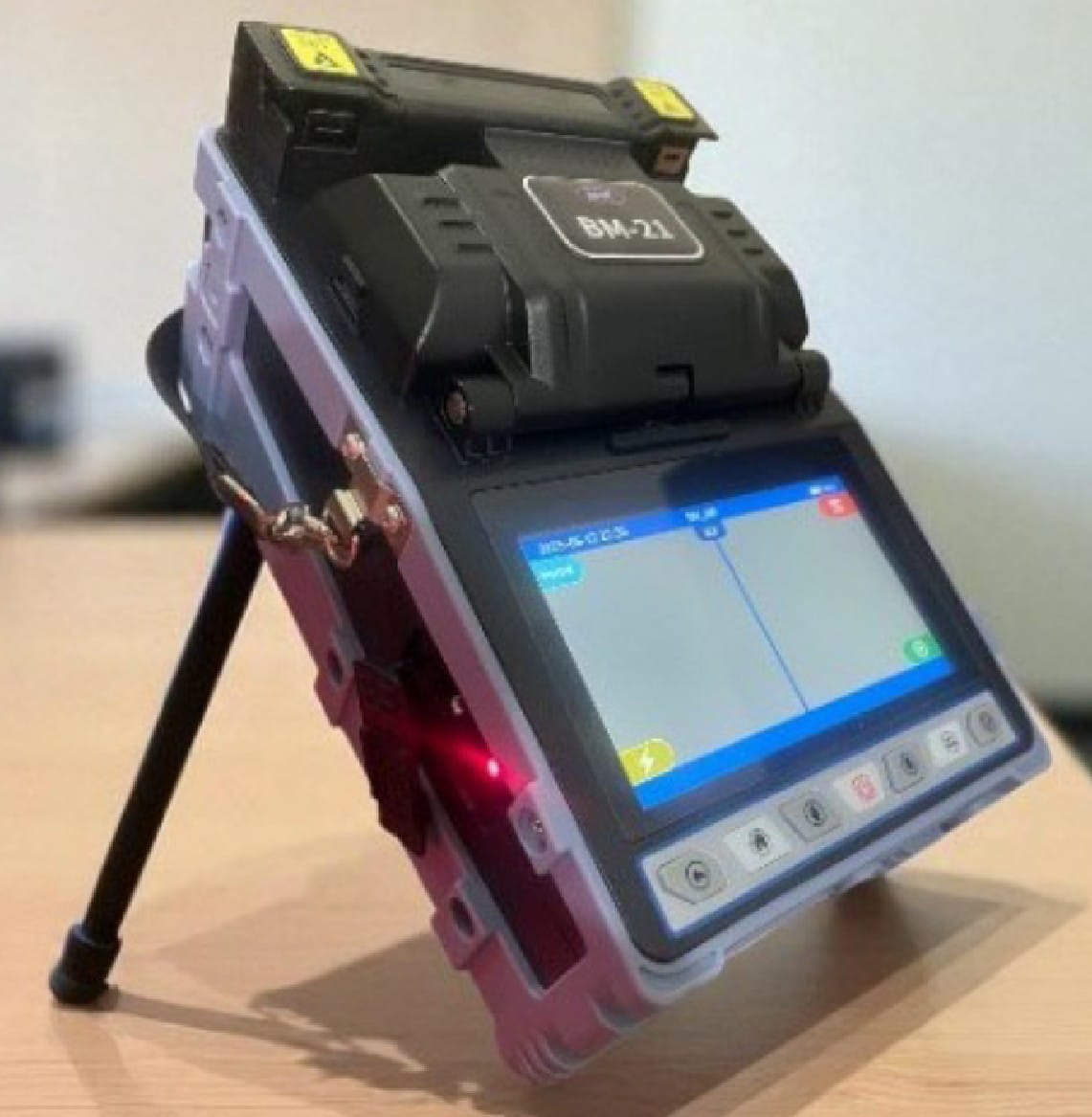
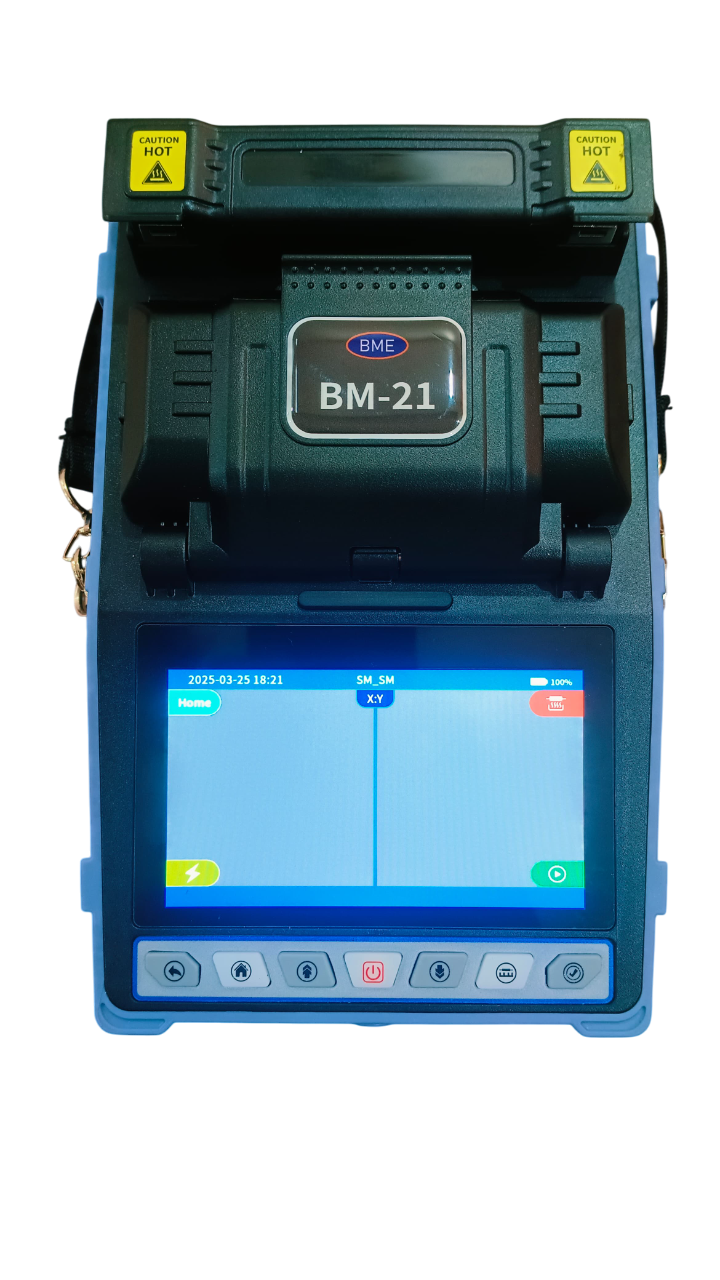
4.3 inch HD touch screen
low loss
500 sets of welding modes, 200 sets of heating modes, 60000 sets of welding records and 6000 pictures
Standard configuration of red light and optical power functions to meet diverse needs
5200mAh large-capacity lithium battery, built-in charging
Fusion Splicing Machine:
How it works: Aligns the fiber cores precisely, then uses an electric arc to melt and fuse the fibers together.
Pros:
Very low signal loss (typically <0.1 dB)
Long-lasting and stable connection
Used in: Backbone and long-haul network installations
Mechanical Splicing Tool:
How it works: Aligns two fiber ends inside a pre-fabricated sleeve with index-matching gel.
Pros:
Quick and doesn’t require expensive equipment
Cons:
Higher signal loss (~0.3 dB)
Less durable than fusion
Used in: Emergency repairs and temporary connections
 Components of a Fusion Splicing Machine:
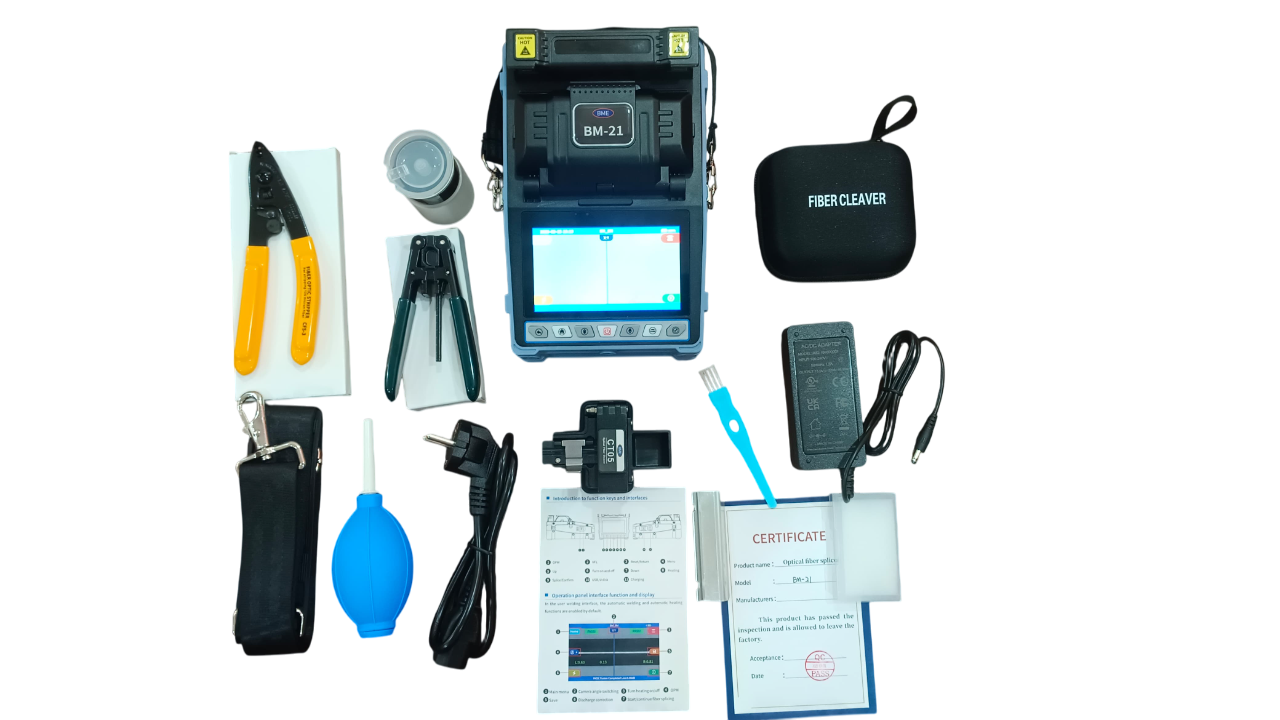
Fiber holders/clamps: Secure the fiber ends
Cleaver: Ensures clean fiber cuts (critical for low-loss splicing)
High-precision alignment system: Usually core-alignment or cladding-alignment via cameras and motors
Electric arc unit: Heats and fuses the fibers
Display: Shows alignment and splice result
Heater: Shrinks protective sleeves over the splice
No reviews yet
Be the first to review this product